
Set the expected effort.
Estimate how frequently each participant will contribute and the number of hours expected across the project timeframe.

The Role & Expectation Setting panel helps project leaders make effort, contribution and behavioural expectations visible before delivery begins. Use it to estimate time commitment and identify where the team expects leadership, problem solving, technical expertise, administration and flexibility.
A person can be named on a project and still be unclear about the type of contribution expected from them. This exercise makes that conversation visible before it becomes a delivery problem.
Estimate how frequently each participant will contribute and the number of hours expected across the project timeframe.
Make clear where the project expects leadership, problem solving, technical input, administration or additional flexibility.
The heat map gives the project team a shared picture of where important capabilities sit and where additional support may be required.
Role & Expectation Setting complements project RACI by adding practical context around the effort and skills each participant is expected to bring.
RACI clarifies Responsible, Accountable, Consulted and Informed roles so decision ownership and task accountability are explicit.
The heat map adds the expected contribution profile: leadership, problem solving, technical expertise, administration and flexibility, together with estimated time commitment.
The original exercise recommends identifying a project start date and finish date before completing Role & Expectation Setting. This allows the time-expectation and cost analysis to be calculated against a meaningful project timeframe.
These dimensions are not job titles. They describe what the project expects people to contribute in this specific piece of work.
Decision making, negotiation, direction and influence.
Critical thinking, creativity and proposing workable solutions.
Subject-matter expertise, specialist knowledge and technical input.
Reporting, coordination, project management and structured follow-up.
Extra or out-of-plan support when unexpected project changes occur.
The original workflow first establishes how often each person is expected to participate and how much effort that participation is likely to require.
Define how often the person is expected to contribute across the project lifecycle.
Estimate the likely time requirement so the team understands the scale of the commitment.
Use the heat map to make the expected type and intensity of contribution visible.
Follow the original training sequence below. The screenshots have been retained from the legacy job aid so the exercise continues to match the application workflow.
From the project, access the panel used to define participant effort, role expectations and estimated project contribution.
START HERE
Set how often each participant is expected to contribute during the project.
EFFORT
Add the expected number of hours for each participant so the project has a realistic view of the time commitment.
TIME COMMITMENT
Move into the expectation-setting area so you can define the contribution profile for each person on the project.
HEAT MAP
Use the Leadership column to identify who will need to use decision-making, negotiation and leadership skills during the project.
LEADERSHIP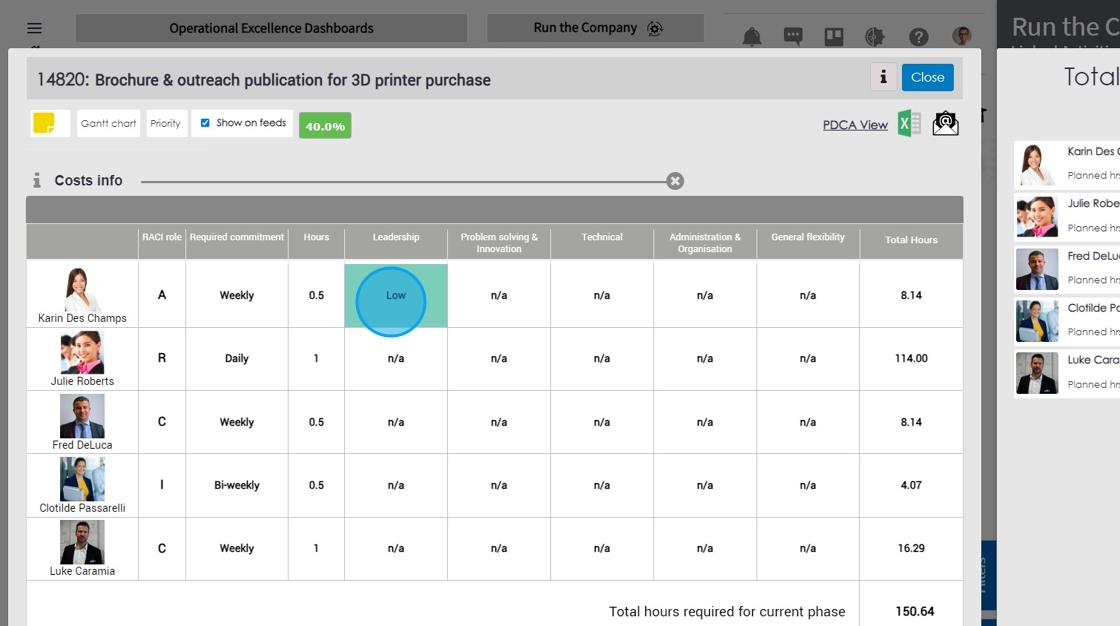
Identify who will be expected to use critical thinking and contribute ideas or solutions when the project encounters problems or opportunities.
PROBLEM SOLVING
Identify who is expected to bring specialist or technical expertise into the project.
TECHNICAL
Identify who will carry reporting, project-management, coordination or other administrative responsibilities.
ADMINISTRATION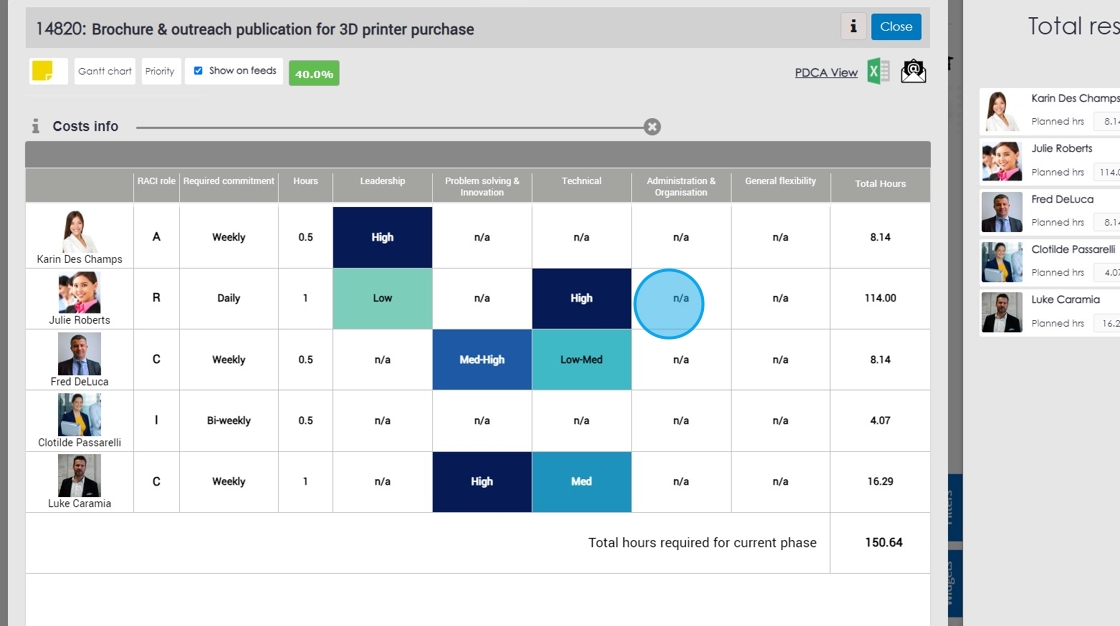
Identify people who may be called upon to provide extra or out-of-plan support when unexpected changes occur during project delivery.
FLEXIBILITY
You now have a visible expectation profile for the project team: how often people are expected to contribute, the likely effort required and the capabilities the project expects them to bring.
Use Role & Expectation Setting alongside RACI and the project task list so people understand both their accountability and the contribution expected from them before delivery begins.